
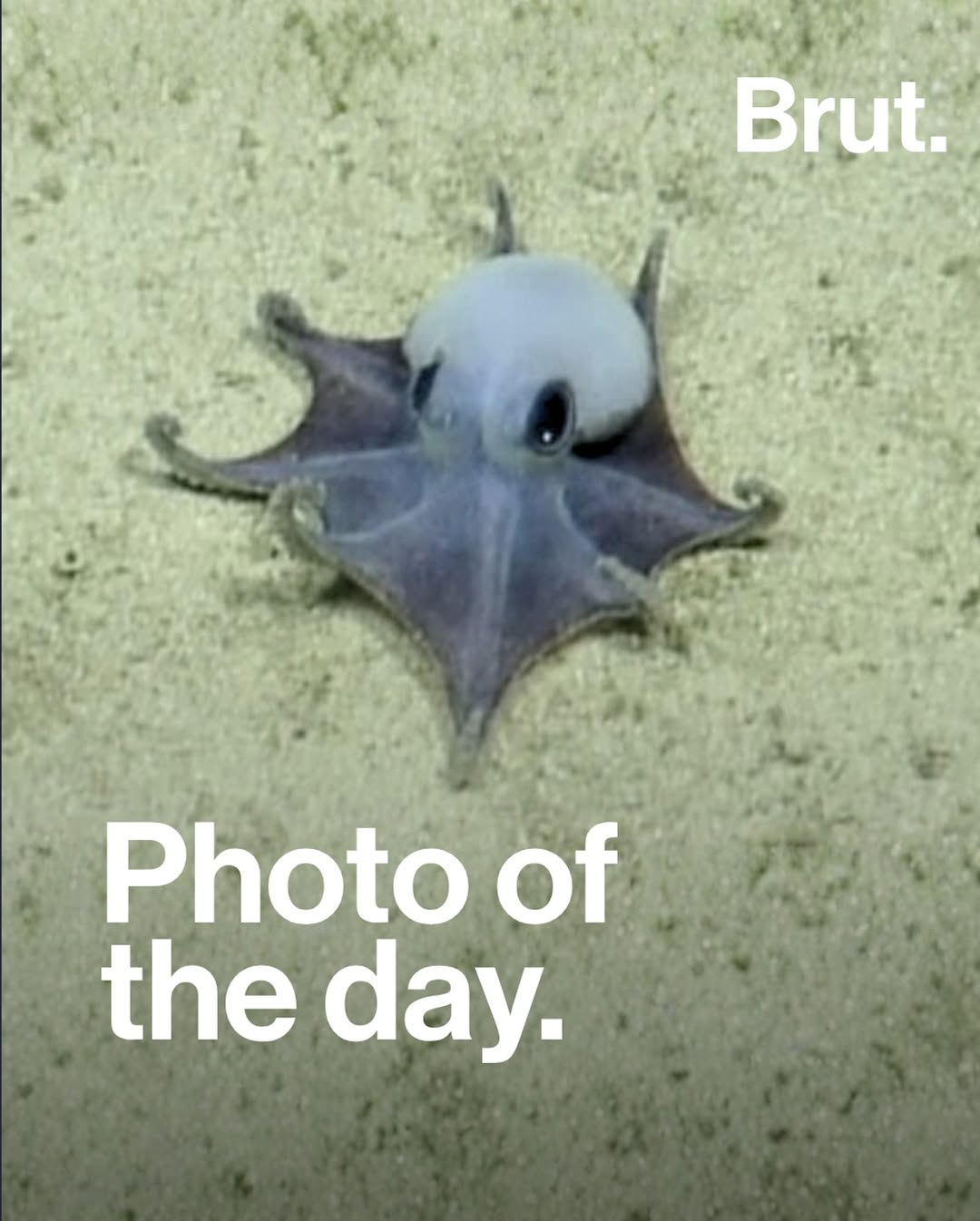
Imagine you’re piloting a remotely operated underwater robot nearly 6,000 feet beneath the surface of the Pacific Ocean. The seafloor stretches out in every direction — sandy, cold, and pitch dark. Then, out of nowhere, a pale blue blob the size of a golf ball catches your camera’s light. It splays its webbed arms flat against the sediment, looks straight at you with enormous dark eyes, and just… sits there.
“I’m just hiding here, you can ignore me,” one researcher jokingly narrated as the little creature nestled into the sand.
Hard to ignore. Impossible, actually. Because what that expedition team stumbled upon in 2015 turned out to be something the world had never seen before: a brand new species of octopus, now officially named Microeledone galapagensis.
A Discovery a Decade in the Making
The story of this tiny cephalopod is almost as remarkable as the animal itself. Scientists aboard the research vessel E/V Nautilus, working in collaboration with the Charles Darwin Foundation and the Galápagos National Park Directorate, first filmed and collected the mysterious blue creature during a deep-sea expedition near Darwin Island in the northern Galápagos.
But identifying it? That took years.
The octopus’s squat body and short arms suggested one genus. Its smooth, pigment-free skin and large central tooth pointed to another. And that blue color — well, that didn’t match anything on record at all. Baffled, the Charles Darwin Foundation sent photos to Janet Voight, curator emerita of invertebrates at the Field Museum in Chicago and one of the world’s foremost octopus specialists.
The specimen itself didn’t even arrive in Chicago until 2022. From there, rather than risk dissecting such a rare and delicate animal, Voight’s team turned to micro-CT scanning — collecting thousands of X-ray image slices to build a detailed 3D model of the octopus’s insides without ever cutting it open.
“There’s nothing like spending the day looking at something no other human has ever seen,” said Stephanie Smith, head of the Field Museum’s X-ray lab.
In May 2026, the findings were published in the journal Zootaxa, officially introducing Microeledone galapagensis to the world.
What Makes It So Unusual?
Where do we even start?
It’s blue. Blue is considered the rarest color in nature, which already makes this octopus a standout. Its mantle — the rounded, head-like body — is a pale, almost colorless blue on top, while its inner mantle and webbing between its arms are a deep, rich purple.
It’s tiny. Small enough to fit in the palm of your hand, this little octopus is actually the smallest member of its family, Megaleledonidae — a group whose other members are typically much larger and inhabit the frigid Southern Ocean near Antarctica. Finding a miniature, tropical version was completely unexpected.
It has no ink sac. Most octopuses can squirt ink as a defense mechanism. Not this one. Whether it relies on camouflage, its deep-sea habitat, or something else entirely for protection is still an open question.
It has unusually short arms and few suckers, smooth skin, and a distinctive large central tooth — all features that, taken together, mark it as something genuinely new.
Oh, and the specimen studied? She was carrying 13 eggs in her ovaries.
Why the Galápagos?
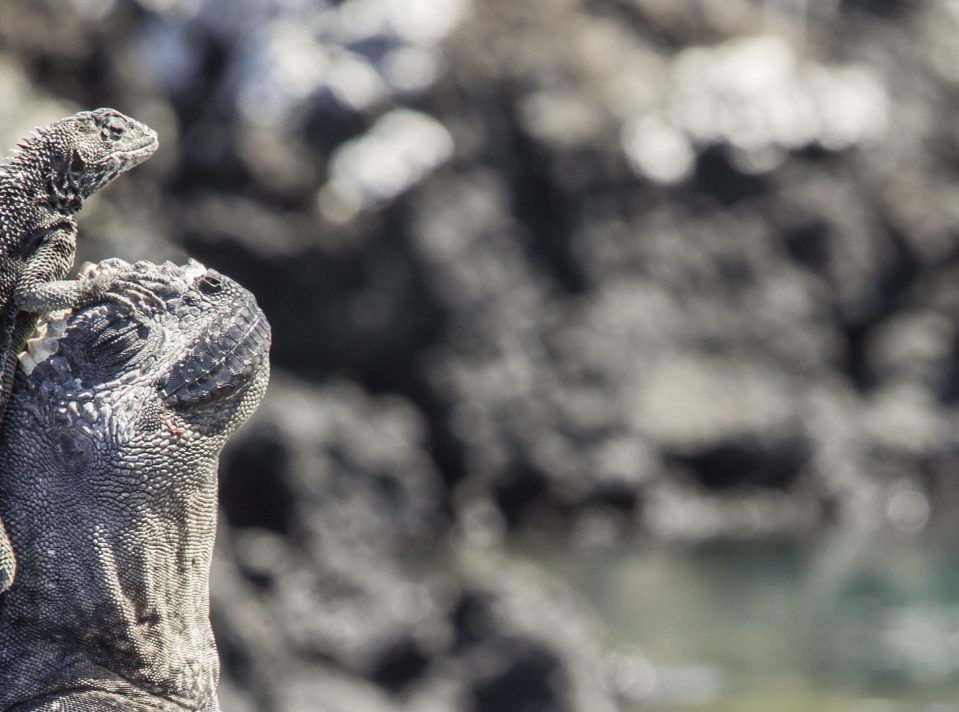
It shouldn’t come as a total surprise that this discovery was made here. The Galápagos Islands, sitting off the coast of Ecuador, are one of the most biodiverse places on the planet — home to more than a thousand plant and animal species found absolutely nowhere else on Earth. Marine iguanas. Giant tortoises. Blue-footed boobies. And now, a tiny blue deep-sea octopus.
The archipelago’s isolation and the extraordinary range of habitats — from volcanic shorelines to underwater mountains — make it a hotspot for evolution to do its most creative work.
A Milestone for Science
Beyond the sheer delight of the discovery, Microeledone galapagensis holds special personal significance. For Janet Voight, who has spent more than 40 years studying octopus evolution, this is the first new octopus species she has officially led a team in formally describing.
“These are little octopuses that live in the deep sea, and hardly anybody on Earth has ever gotten to see them,” she said. “I just feel lucky that I got to work with them. If you took all the land on Earth and pieced it together, you would not cover the Pacific Ocean. The oceans are so big, and there’s so much left to explore.”
And that’s perhaps the most exciting takeaway of all. In an era where it sometimes feels like every corner of the Earth has been mapped and catalogued, a golf-ball-sized blue alien is out there on the ocean floor, quietly going about its life — waiting nearly a decade to be officially introduced to the rest of us.
What else is down there? Check out our Galapagos Island Hopping Tours and maybe see for yourself!

Jake is originally from Sydney and co-founded Ecuador Eco Adventure with Wlady back in 2006. Together they built one of the country's most prominent climbing and hiking agency that is number one in summit attempts of Chimborazo, Cotopaxi, Antisana, and Cayambe. Ecuador Eco Adventure has since been recommended in National Geographic Adventure, The Rough Guide, and the Lonely Planet.

0 Comments