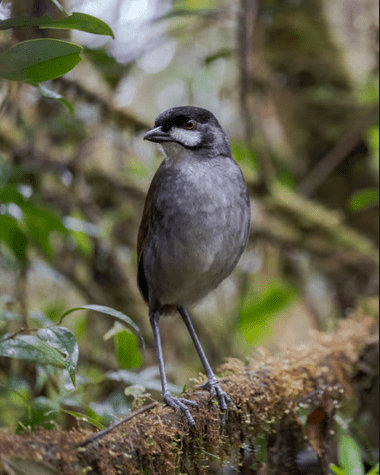
In 1997, American ornithologist Robert Ridgely was exploring the tropical montane forests of the Andes in southeastern Ecuador when he stumbled on something extraordinary: a bird species no scientist had ever documented. Local farmers already knew it well — they called it “jocotoco,” a name that mimicked its loud, distinctive bark of a call.
Two years later the bird was formally described and given a scientific name honoring its discoverer: Grallaria ridgelyi, the jocotoco antpitta.
A Race to Save a Habitat
The jocotoco antpitta wasn’t just new to science — it was immediately recognized as critically endangered. Its range was tiny, confined to a sliver of cloud forest, and that forest was under threat. Ridgely understood that describing the bird wasn’t enough; if it was going to survive, its habitat needed to be protected, fast.
So Ridgely and a group of like-minded collaborators did something ambitious: they started raising money from donors across the US and Europe to buy the land outright. In 1998, that effort became the Jocotoco Foundation, and its first purchase created the Tapichalaca Reserve — ground zero for the antpitta’s survival.
From One Bird to a Nationwide Network
Nearly three decades later, that single land purchase has grown into something far bigger than anyone might have predicted. The Jocotoco Foundation now manages around 19 reserves scattered across Ecuador, spanning roughly 50,000 hectares, with stewardship over an additional 82,000 hectares of privately and communally owned land.
Those reserves weren’t chosen randomly — each one targets a landscape that matters disproportionately for global bird conservation, from Amazonian lowlands to the volcanic highlands to the Galápagos Islands.
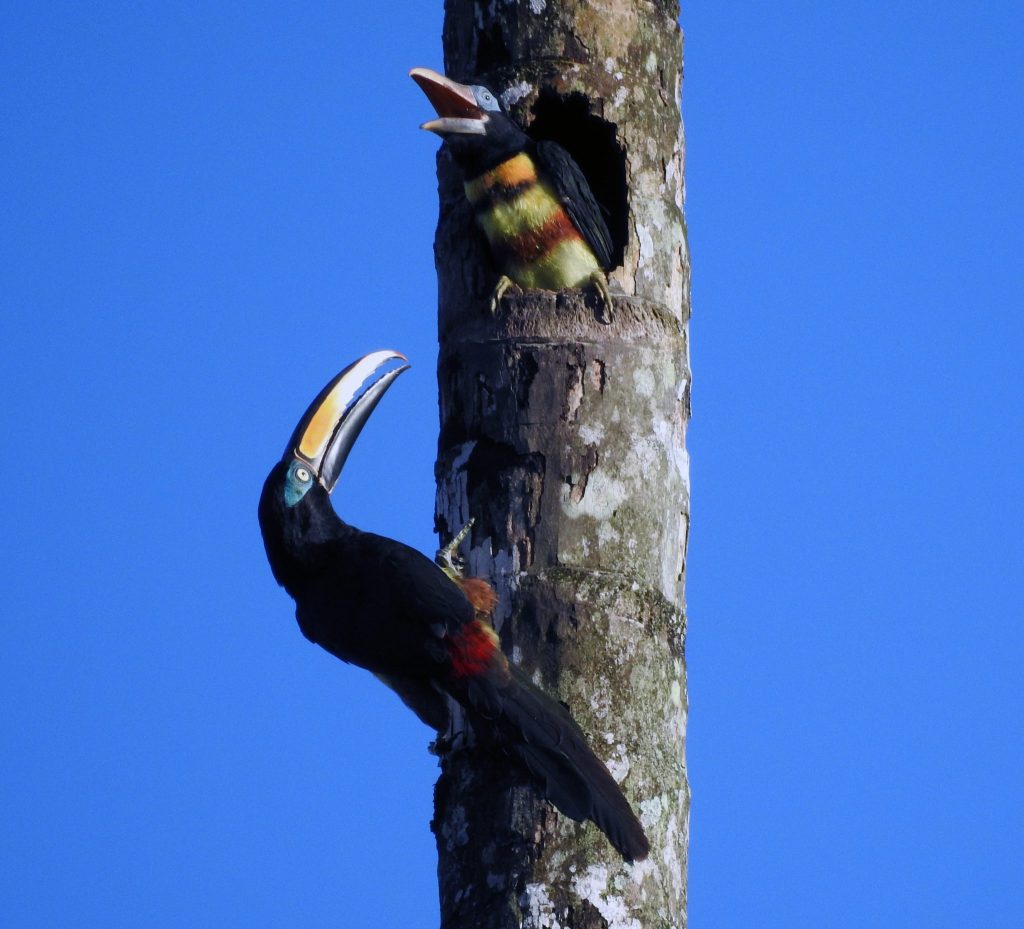
The payoff has been staggering. Collectively, Jocotoco’s reserves are now home to more than 1,350 bird species — around 80% of every bird found in Ecuador, and roughly one in every eight bird species on the planet.
Proof That Damaged Land Can Heal
Perhaps the most striking finding from the foundation’s work is what happens after protection kicks in. Forest areas that were once degraded and are now under Jocotoco’s management have recovered close to 90% of their original biomass and species richness — in just thirty years.
That’s a meaningful data point for conservationists everywhere: land doesn’t have to be pristine to be worth saving. Given protection and time, it can bounce back dramatically.
Conservation That Includes People
The foundation’s approach goes beyond simply fencing off land. Jocotoco has built ecotourism, local employment, and community partnerships into its core strategy — reserves double as income sources for nearby residents through guiding, lodging, and tourism revenue. Local rangers monitor the land and its wildlife, and ongoing scientific work — including camera traps and audio recorders — tracks how species are recovering over time.
That combination of rigorous science, local partnership, and economic incentive is a big part of why conservationists elsewhere are studying the Jocotoco model as a potential template for biodiversity recovery in other high-stakes ecosystems around the world.
The Bigger Picture
It’s a remarkable arc: one overlooked bird, spotted by chance on a muddy Andean slope, ended up reshaping conservation for an entire country. Thirty years on, the jocotoco antpitta’s story isn’t just about saving a single species — it’s a working blueprint for what happens when scientific discovery, sustained funding, and community investment move together.
This post is a summary based on reporting from The Guardian — read the full original story for the complete account.
Jake is originally from Sydney and co-founded Ecuador Eco Adventure with Wlady back in 2006. Together they built one of the country's most prominent climbing and hiking agency that is number one in summit attempts of Chimborazo, Cotopaxi, Antisana, and Cayambe. Ecuador Eco Adventure has since been recommended in National Geographic Adventure, The Rough Guide, and the Lonely Planet.
0 Comments